
TRIDENT
Guitar amplifier 01 / 09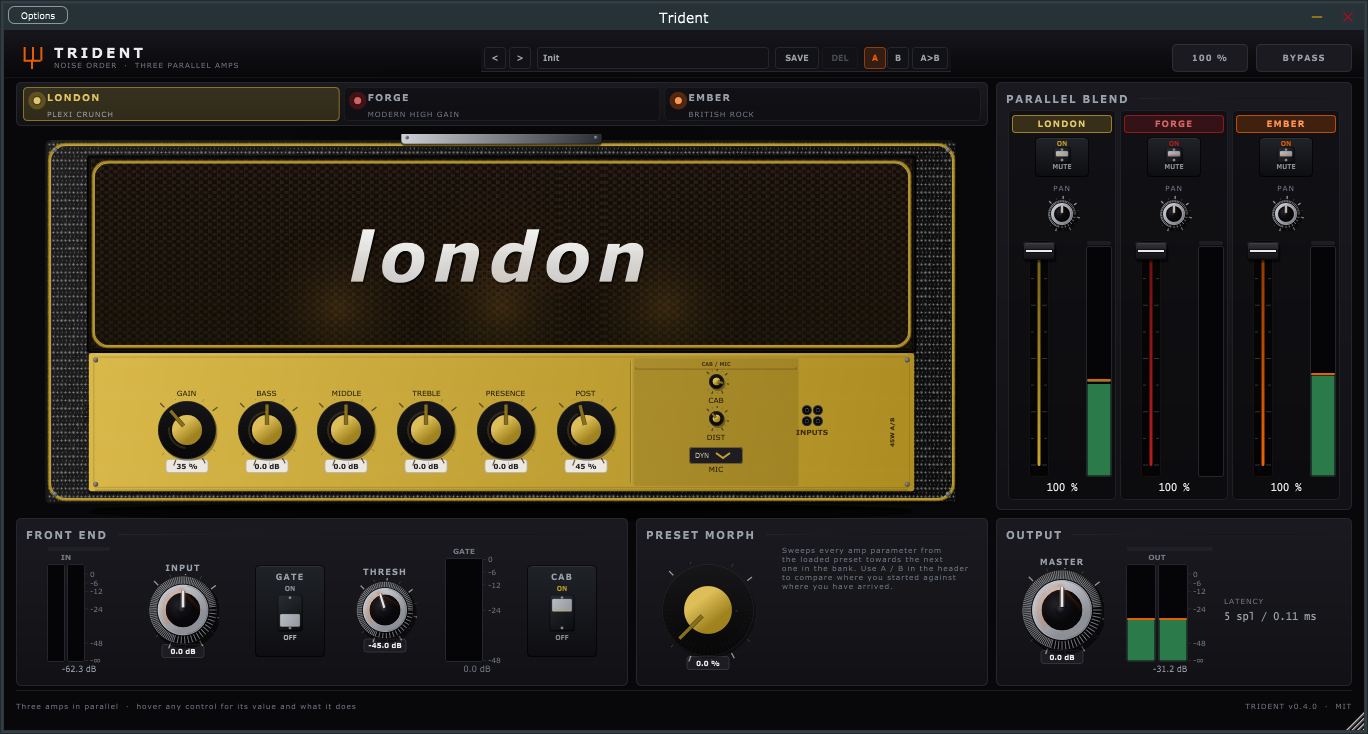
Three amplifiers at once, not one at a time.
Trident runs three complete amp chains in parallel - LONDON, FORGE and EMBER - each with its own microphone, cabinet, pan position and level. Most amp plug-ins make you choose one model and switch; Trident blends all three simultaneously, so a British crunch can sit underneath a modern high-gain wall without re-recording the part or opening a second instance.
- Three parallel amp chains with independent mic, cab, pan and level
- Live blend mixer with per-chain metering, mute and solo
- Input gate, cabinet section and preset morphing
- Reports its processing delay so parallel busses stay phase-aligned
MONOLITH
Guitar amplifier 02 / 09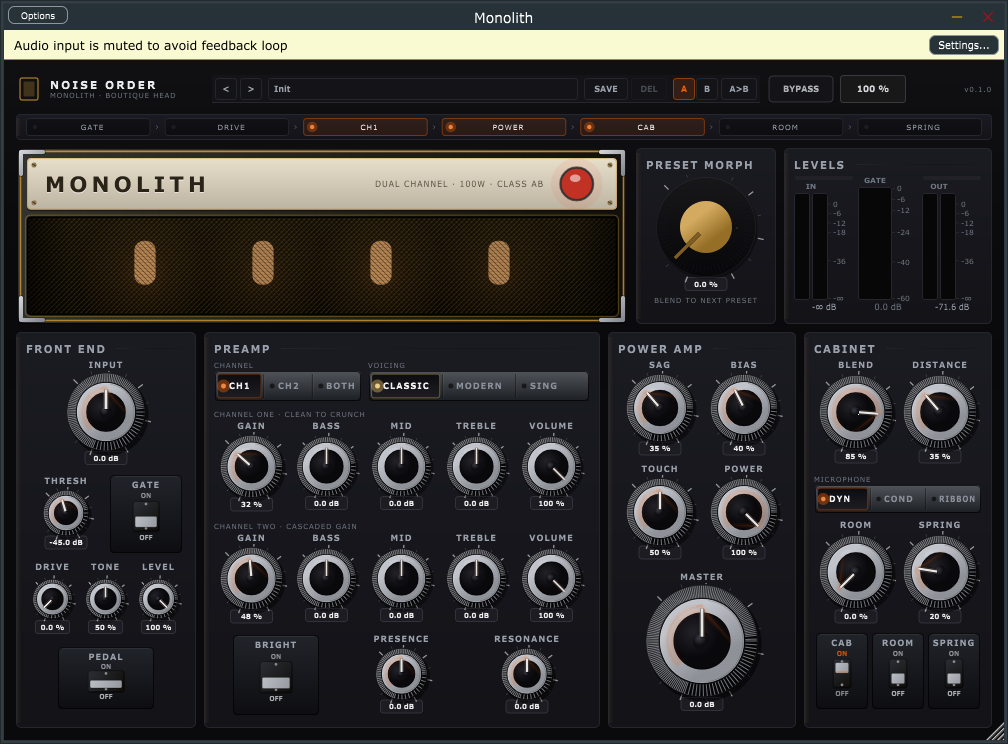
One boutique head, explored properly.
Where Trident goes wide, Monolith goes deep. A single dual-channel head - clean and lead - with the power-amp behaviour that decides how an amp actually feels: supply sag, bias, and touch response. The full chain runs gate, pedal, preamp, power amp, cabinet, room and spring.
- Two channels - clean and cascaded gain - plus three voicings
- Power-amp sag, bias and touch controls
- Microphone selection, cabinet, room and spring reverb
- Input, gate-reduction and output metering
SUBDIVIDE
Bass processor 03 / 09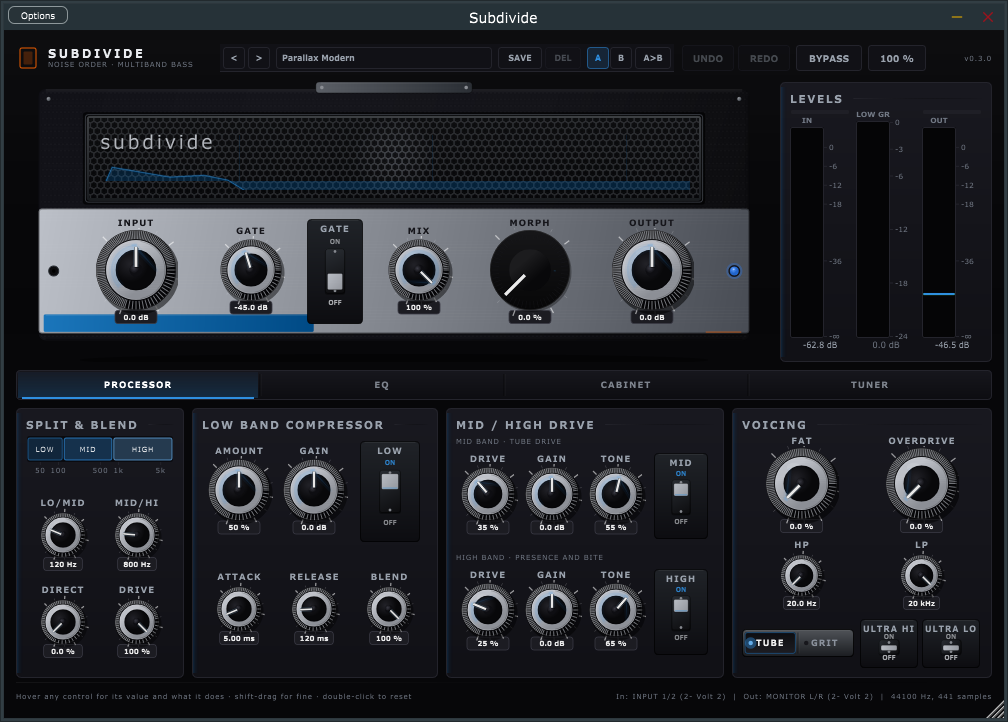
Compress the lows. Drive everything else.
Subdivide splits the bass into three bands and treats each the way it wants to be treated: compression on the low band so the bottom stays solid, independent drive and tone on the mids and highs where the grind lives, then cabinet and EQ across the result. The problem it solves is the oldest one in bass - distortion that eats the low end.
- Three-band parallel split with per-band drive and voicing
- Dedicated low-band compressor with gain-reduction metering
- Six-band EQ with a live, draggable response curve
- Built-in chromatic tuner and spectrum analyser
EMO-COMP
Dynamics 04 / 09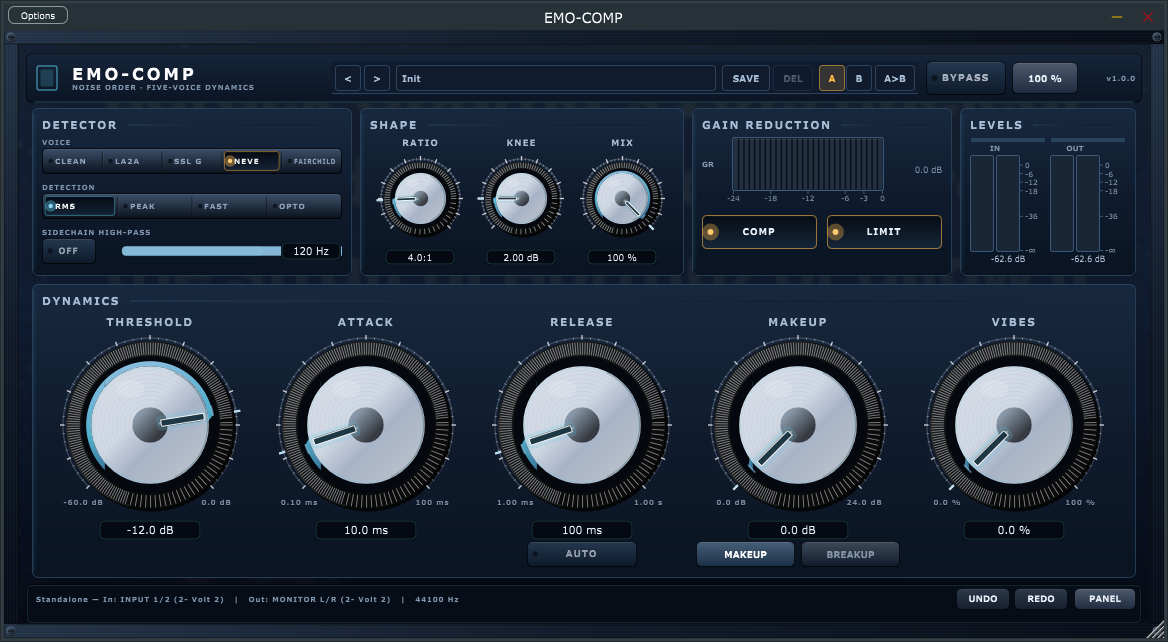
Five compressor characters in one console.
Classic compressors do not differ mainly in their controls - they differ in how they respond. EMO-COMP offers five distinct detection and saturation characters, from clean and transparent through optical, bus, variable-mu and transformer-coloured, so you can pick a behaviour instead of buying five plug-ins.
- Five voices: Clean, optical, bus, vari-mu and transformer
- Compress and limit modes with switchable detection
- Sidechain high-pass filter and external sidechain input
- Parallel mix, makeup and breakup character control
DRIFT
Delay 05 / 09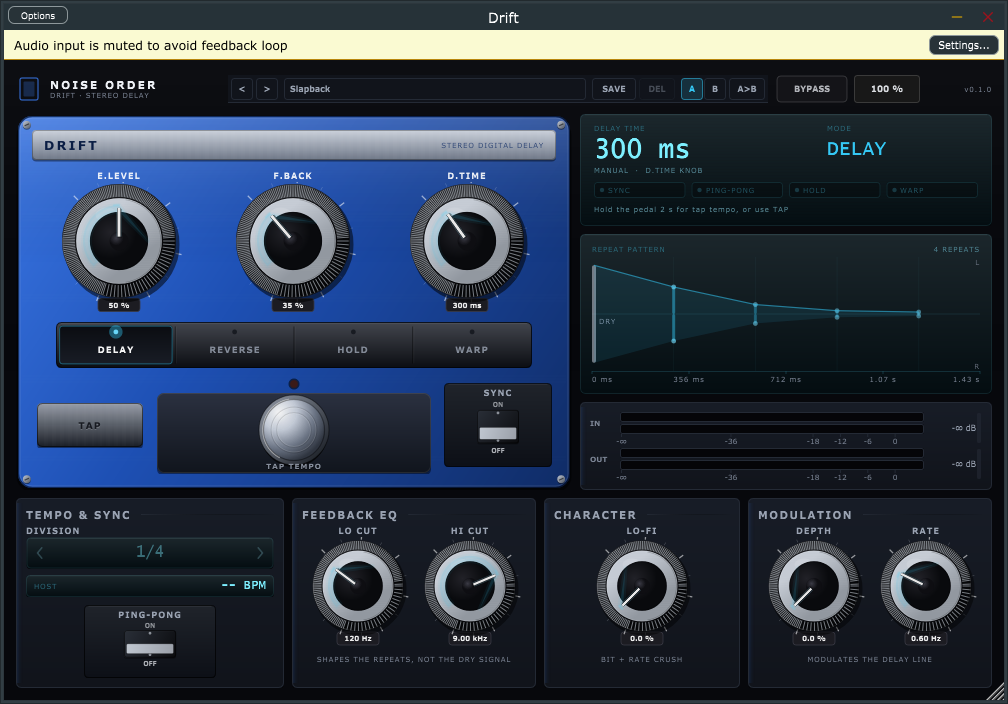
Pedal on the outside, studio on the inside.
Drift keeps the immediacy of a delay pedal - tap the tempo, hold to freeze, stomp for a feedback swell - while adding what a pedal cannot: note divisions locked to your session tempo, tone shaping inside the feedback path, tape-style degradation and modulation.
- Tap tempo, hold/loop capture and warp swell
- Host-synced note divisions or free time
- Tone shaping and lo-fi degradation in the feedback path
- Stereo, ping-pong and reverse modes
SURGE
Pitch 06 / 09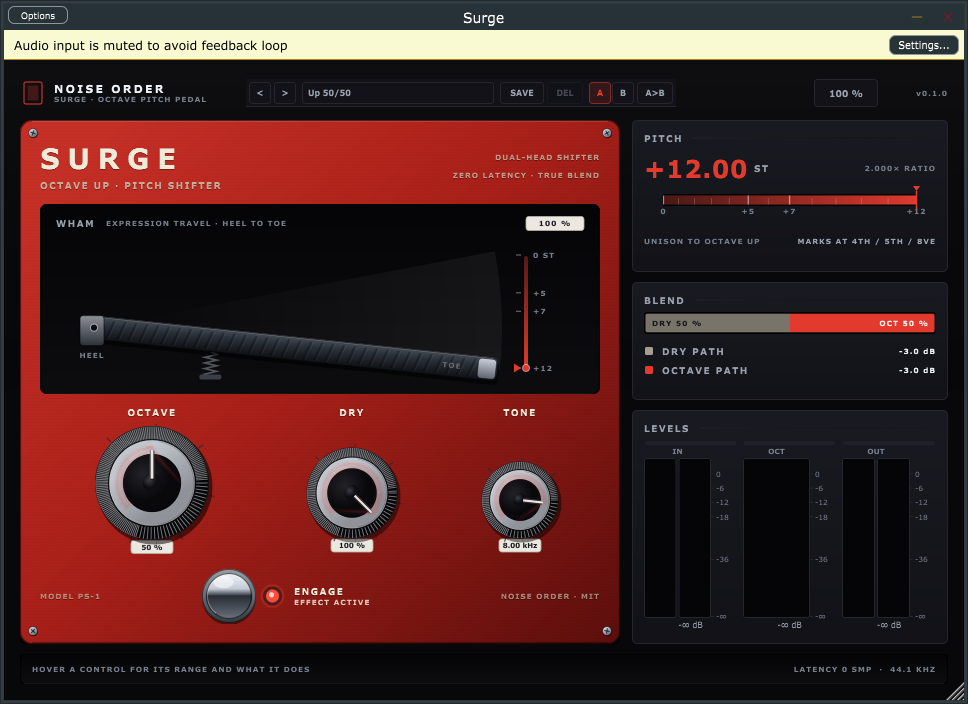
An octave up, blended against the dry signal.
A focused octave-up pitch shifter in the Whammy tradition. The pitched voice is mixed against the untouched original with an equal-power blend, so it thickens a line rather than replacing it. One job, done cleanly.
- Octave-up voice with continuous dry blend
- Equal-power mixing so level stays constant across the blend
- Tone control for the pitched path
- Latency reported to the host
THE IGLOO
Chorus 07 / 09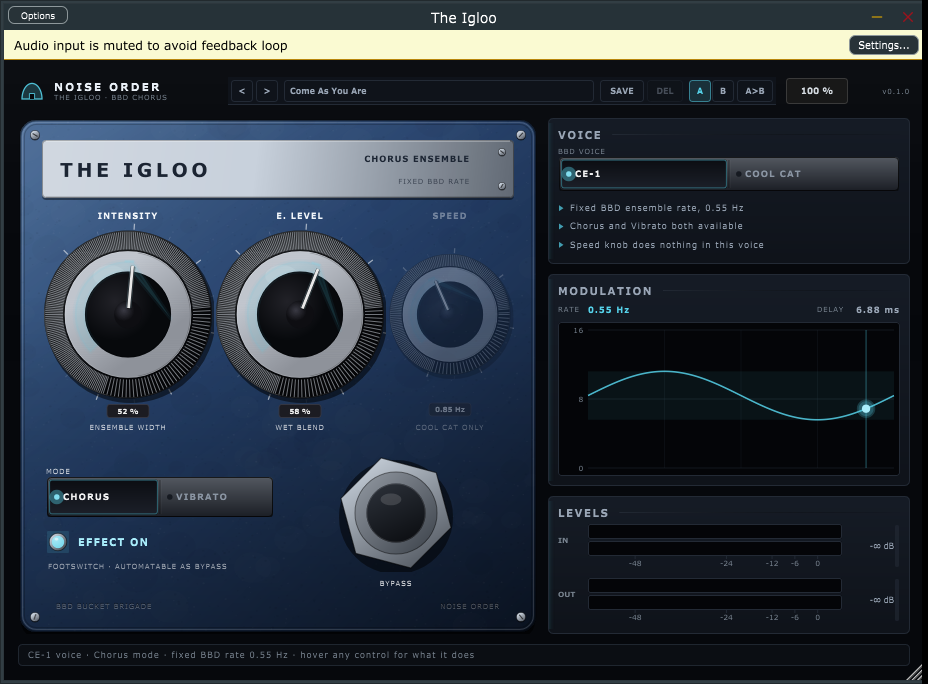
Two bucket-brigade chorus voices.
The Igloo models the bucket-brigade delay chorus that defined a generation of clean guitar tones. Two voices: a fixed-rate ensemble with a chorus/vibrato switch, and a variable-speed mode when you want to set the rate yourself.
- Fixed-rate ensemble voice with chorus and vibrato modes
- Variable-speed voice with independent rate control
- Intensity, depth and effect level
- Warm bucket-brigade filtering on the wet path
GRIND
Overdrive 08 / 09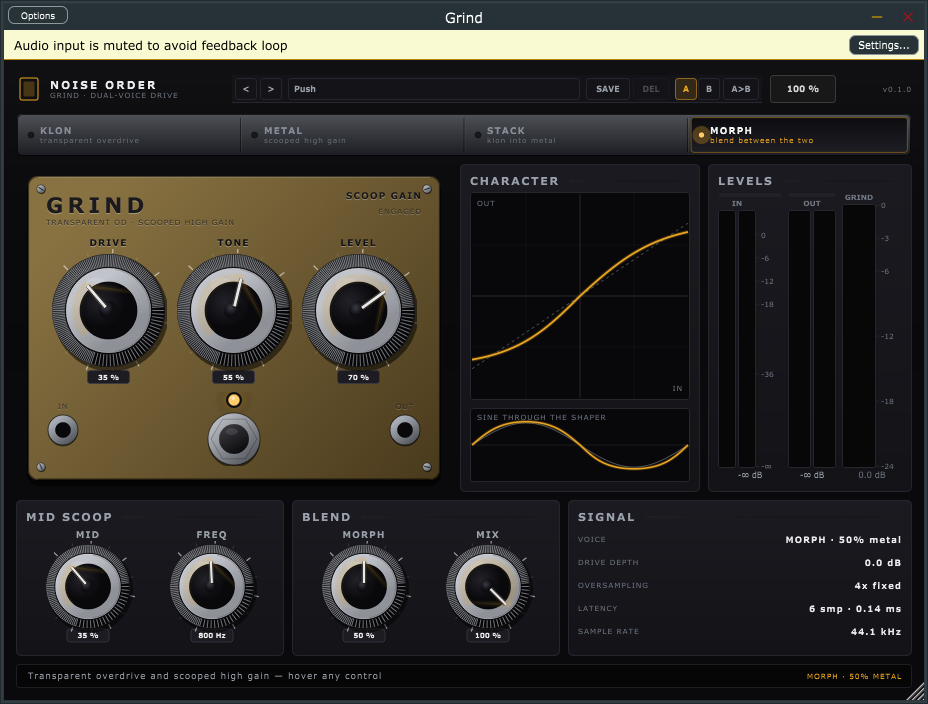
Transparent overdrive and scooped high gain - and everything between.
Two drive voices in one pedal, with a morph control that sweeps continuously from one to the other. A live display shows the actual saturation curve and what a sine wave becomes passing through it, so the character control is something you can see, not just hear.
- Two voices - transparent OD and scooped high gain - with continuous morph
- Live transfer-curve and waveform display
- Mid scoop with adjustable frequency
- Fixed 4x oversampling with reported latency
PRACTICE IS FOR WINNERS
Standalone rig 09 / 09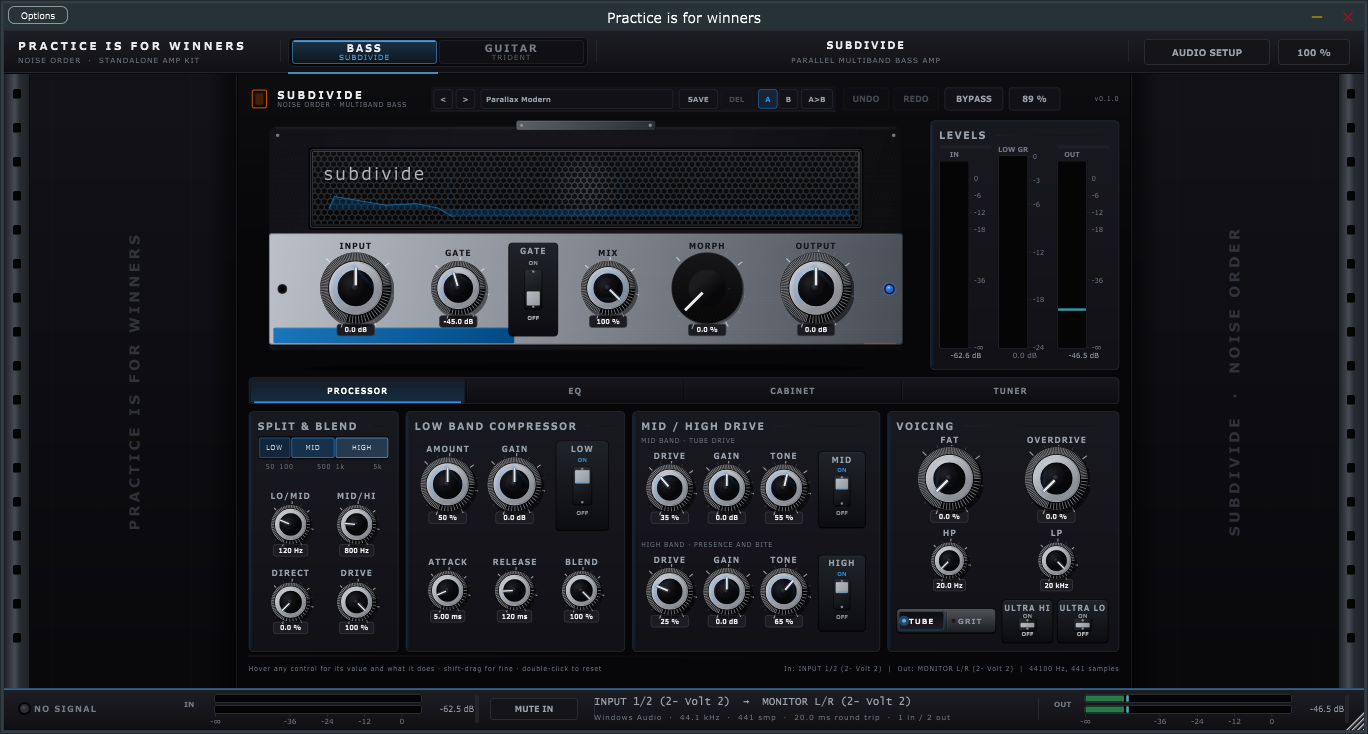
Plug in and play. No session, no setup.
A standalone application, not a plug-in. Connect a guitar or bass to your audio interface and play through the full Subdivide or Trident signal chain without opening a DAW. Intended for the times you want to practise rather than produce.
- Runs standalone - no host required
- Switch between the bass and guitar rigs
- Guided first-run audio device setup
- Live input metering so you can see signal arriving